
June 22, 2026 · 8 min read
Fat of The Land - Part 7 - No Rumen, No Buffer
By Raiden DeLuca
Part of: Fat of The Land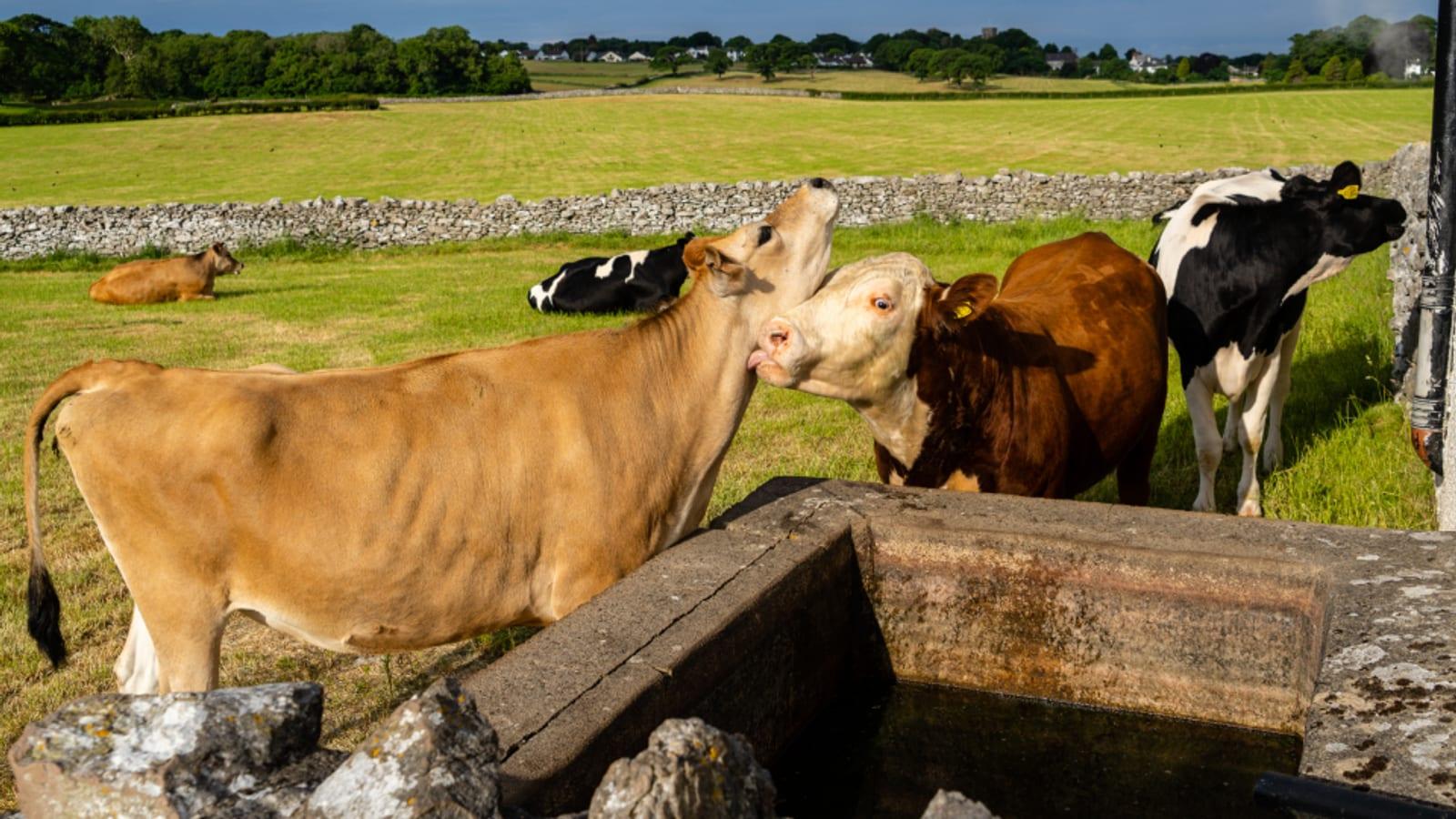
A cow is forgiving in a way a pig and a chicken are not. You can feed a cow the wrong thing and it will still give you fairly stable fat, because the animal reworks the feed on the way through. Feed a pig or a chicken the wrong thing and you get that wrong thing right back in the meat. That one difference is why the grass-fed question, which mattered for beef, matters even more for pork and poultry, and why where you buy them changes what ends up in your body.
The buffer a cow has
A cow runs its food through the rumen, a large fermentation chamber full of microbes, before any of it reaches the bloodstream. Those microbes take the unsaturated fat in the feed, the fragile, bendy kind, and saturate it, adding hydrogen until it is the straight, stable kind. This is the same basic chemistry as the industrial hydrogenation behind trans fat, but it does not end in the same place. Factory hydrogenation is only taken halfway, and that half-finished state is exactly what produces the damaged trans fats that harm the heart. The rumen carries most of the fat all the way to fully saturated, and the little bit of trans fat it does make is the natural ruminant kind, the family that includes CLA, which research treats very differently from the factory version and not as the artery-damaging type. By the time the fat reaches the meat it has been rebuilt, so a cow’s fat comes out mostly saturated and stable no matter what the cow ate, sitting around thirty to forty percent saturated fat across the board, and feed barely moves that backbone. It is an elegant bit of design, the cow made with its own machinery for turning poor feed into good fat.
The last post’s grass-fed edge was on the omega ratio, the CLA, and the vitamins, not on that saturated backbone, because the rumen keeps the backbone about the same whatever the cow ate. The cow protects its own fat quality, and that protection is the thing a pig and a chicken do not have.
Pigs and chickens have no such filter
A pig and a chicken have a single, simple stomach, the same basic setup we have. There is no fermentation chamber rebuilding the fat, so the fat they eat is largely the fat they store. A pig or a chicken can still build some saturated and monounsaturated fat from scratch out of extra carbohydrate, so they are not pure mirrors of the feed, but they cannot take the polyunsaturated fat they eat and saturate it the way a rumen does. The polyunsaturated part, the linoleic acid, the omega-6, goes in and gets stored about as it arrived, and whatever omega-6 you feed them you find again on the plate.
Conventional chicken fat has climbed sharply in linoleic acid over the last several decades as the birds moved onto grain and seed-oil-rich feed, by some estimates from a few percent up to around a fifth of the fat. Conventional pork can run around fifteen percent or more of its fat as linoleic acid, enough that the fat goes visibly soft, since linoleic acid is what keeps a fat liquid. Put it in the omega terms from a couple of posts back and the gap is stark. Chicken and pork tend to land somewhere around fifteen to nineteen to one on the omega-6 to omega-3 ratio, while even grain-fed feedlot beef sits closer to five to eight, and grass-finished beef down near one to three. Conventional chicken and pork are, by this measure, more lopsided than the beef most people are taught to worry about.
How the feed got here
None of this is how pigs and chickens used to eat. It tracks the rise of cheap, subsidized commodity grain, mostly corn and soy, and the move to large confinement operations built to raise animals fast and cheap. Corn and soy are high in linoleic acid, so as they became the backbone of animal feed, the fat of the animals followed. Consolidation into fewer and bigger operations, and the long supply chains that came with it, pushed it further, leaving us with meat raised far from the people who eat it and optimized for cost and speed rather than for the quality of the fat. There is no grand plot needed to explain it. Cheap inputs, scale, and thin margins did the work, and the fat on the plate changed as a side effect of feeding animals the cheapest calories we could grow.
Where it matters most
This does not make chicken and pork bad food. A skinless chicken breast carries very little fat of any kind, so its linoleic acid barely registers, and it stays a lean, clean protein no matter how the bird was raised. The feed shows up where the fat is concentrated, in chicken skin and thighs, in pork belly and bacon and lard, and in the drippings you cook with. The fattier the cut, the more of the animal’s feed you are eating. So the rule of thumb is simple enough: with beef, the cow handles the fat quality for you, while with pork and poultry you handle it by sourcing, and that choice carries the most weight when you are eating the fatty parts.
There is an honest limit here too. You cannot put a pig or a chicken on grass the way you can a cow. Pasture might replace part of their diet, but they cannot live on it, so even the best-raised pork and poultry still eat mostly grain and still carry more linoleic acid than a ruminant does. Better sourcing genuinely improves them, but it does not turn them into beef. The lever is real, just smaller than the one you have with cattle.
We are built the same way
We are monogastric ourselves, exactly like the pig and the chicken, with no rumen to rework anything. So the fat we eat is, to a real degree, the fat we become. Those fatty acids get built into the membranes of our own cells, and a membrane loaded with fragile polyunsaturated fat is more prone to the same oxidation we covered with the oils, the slow rancidity that does its damage from the inside. I am keeping this measured, because the full case on what that does to us belongs with the seed oil post just ahead, and the human evidence there is more careful than the internet wants it to be. The basic point still stands. Eating a steady stream of fat from animals raised on linoleic acid is one more way that fat ends up in you, and not only on your plate.
What to do with this
A label cannot reliably tell you how a chicken or a pig was fed, and with these animals the feed is the whole story, which is the real reason I would rather know the farmer than read the package. With beef that work is already done for you, so the half cow I order, grass-fed and grass-finished, pasture-raised with no antibiotics, raised on green pasture along the Snake River, is a bonus on top of fat that was going to be stable anyway. With pork and poultry there is no such cushion, so I generally lean toward the leaner cuts when I am unsure of sourcing quality, and care about it most on the fatty parts where the feed actually shows up.
Pork I mostly skip, and that is a personal call rather than a health prescription, since well-sourced or lean pork is a fine food. I have just never found anything in pork I cannot get from a chicken or from the beef I already trust, so I do not go looking for it. I will admit I am a sucker for bacon when I am on vacation, and when that craving hits at home I try hunt down beef bacon instead. For anyone who does eat pork, the same rule holds, better sourcing matters more the fattier the cut, and pork is fatty most of the way through.
More than any single rule, the answer is to get close to your food again. Know the farm, know the feed, and shorten the distance between the animal and your table, because for the animals that cannot fix their own fat, that relationship is the closest thing to a fix there is. The cow was made with a built-in system that turns rough feed into stable fat, and the trouble came from overriding that design in the animals that lack it, feeding pigs and chickens the cheapest fat we could grow and storing it in them, and then in us. Putting them back on something closer to what they were made to eat is most of the repair.
All of this has been specific to the fat IN animals, but one of the highest fat exposures is cooking fats, and there is many animal fats we can cook with, so many that it can get confusing what to use and when, so I will dive into that next.
Sources
-
McAfee AJ et al. / Scollan ND et al., “Can we improve the nutritional quality of meat?” Proceedings of the Nutrition Society. https://www.cambridge.org/core/journals/proceedings-of-the-nutrition-society/article/can-we-improve-the-nutritional-quality-of-meat/30317016ABE0CB1573F7216CC399E622 (opens in a new tab)
-
“Enrichment of ruminant meats with health enhancing fatty acids and antioxidants,” Frontiers in Animal Science, 2024 (omega-6 to omega-3 ratios across beef, pork, and chicken). https://www.frontiersin.org/journals/animal-science/articles/10.3389/fanim.2024.1329346/full (opens in a new tab)
-
Vahmani P et al., “Bioactivity and health effects of ruminant meat lipids,” Meat Science (ruminant fat is 30 to 40 percent saturated due to rumen biohydrogenation). https://www.sciencedirect.com/science/article/abs/pii/S0309174019311672 (opens in a new tab)
-
White HM and Latour MA, “The Impact of Added Diet Fat on Carcass Fat Quality,” The Pig Site (pork fat reflects dietary fat; soft fat). https://www.thepigsite.com/articles/the-impact-of-added-diet-fat-on-carcass-fat-quality (opens in a new tab)
-
“Fatty Acid Comparisons of Grain and Forage-Fed Pork,” Practical Farmers of Iowa (pasture shifts but cannot replace the grain diet). https://practicalfarmers.org/research/fatty-acid-comparisons-of-grain-and-forage-fed-pork/ (opens in a new tab)
Comments
Leave a comment
Loading comments…